2024 – 2026
Truist Bank
Designing passwordless authentication for your grandmother | grandfather | grandparents | aging parents | retired mom | retired dad | great-aunt | 401(k) | IRA | pension | life savings | retirement account.
Over the span of two years, I designed advanced authentication experiences for Truist Bank’s digital products, and expanded my design patterns to other teams. The work is confidential, so this page is about how I worked and what I learned.
Overview
Finding a balance between security and ease at every touchpoint.
Verification during sign-in and step up[1]Step up: asking for more proof that it’s you before something riskier, like sending money or changing your contact details. are the most encountered flows at a bank. When checking their bank accounts, users can be often rushed or worried about fraud. If you make your security too loose, you risk allowing bad actors to come in. Make it too strict, and you’re adding excess friction to the experience, even risking dropoff.
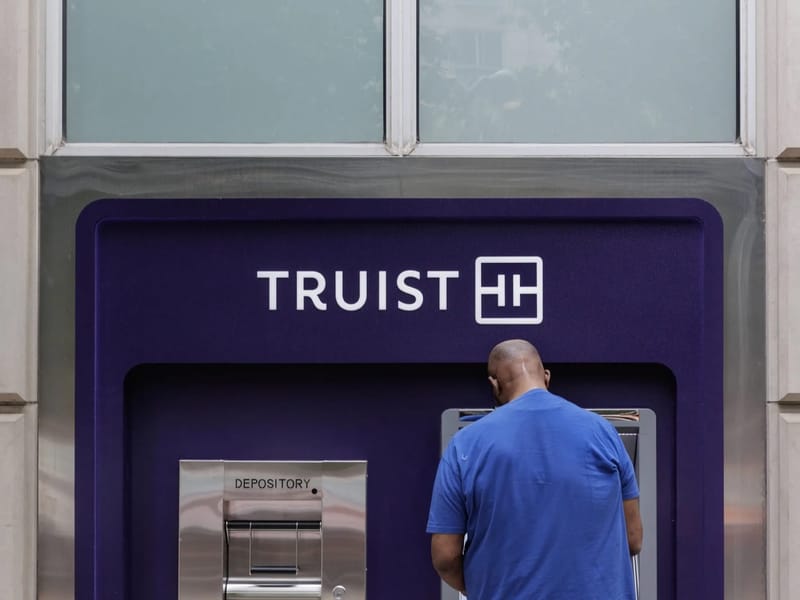
Authentication occurs at every point of interaction with the bank: in digital banking, on physical devices, with teammate support, and on the go. So, when banks merge[2]Truist formed in 2019, when BB&T and SunTrust merged., customers can end up meeting inconsistent experiences. Making them feel like one was both a design and a strategy problem.
 01Sign in to digital banking
 02At the ATM
 03At the bank
 04Send and transfer money
What did I work on?
- 01
Sign-in and recovery
Content, device guidance, and research for both password and passwordless verification.
- 02
Design ops
A shared library of authentication patterns that designers and teams referenced and built from.
- 03
Internal teammate tooling
Designed internal teammate tools to support the team.
- 04
Design thinking workshops
Mentored non-designers to take part in the design-thinking process, and take their learnings back to their teams!
Process
How did I work?
-
Research came first.
I started with deep research into passwordless verification patterns, mapping them against the existing sign-in experience. I designed testing with our research partners, to find out what worried people during sign-in and recovery, and then designed for reassurance: clear content, device-specific language, and an educational approach to passwordless.
-
Ideation → launch
I wrote copy recommendations, helped shape research questions and acted on synthesized results, built prototypes for testing and sharing, and iterated from initial ideation → launch. I prepared our experiences for delivery, creating accessibility annotations and data requirements for development.
-
Patterns other teams picked up.
In the process, I also created a foundational authentication library that other product teams naturally began to consume. This work has since grown and opened up our team’s capacity to support more areas of the bank.
With research
Worked closely with research partners and designed studies.
With engineering
Provided responsive design handoffs and conducted extensive accessibility checks.
With other product teams
Provided dedicated servicing to ensure a consistent verification experience.
Learnings
What did I learn?
- 01
Ask why before designing.
Asking what a request was really for, and who it mattered to, often aligned the scope of what I designed to team/leadership needs. It was also how I stopped being surprised by what leadership cared about.
- 02
Build things that people will reuse and rely on.
Some of my most valuable and far-reaching impact came from self-started work. Strong usage patterns spread further than one-off deliveries, and helped me grow from a pixel-pusher to a design strategist.
- 03
Concise is best.
Banks have to communicate a lot of compliance and regulation, and customers read very little. I spent much of my time cutting content to the bare minimum. Often times, fewer words meant fewer user errors.
That’s what I can share.
My work with Truist is under NDA, but please reach out if you have any questions.
bhargs@bhargs.com